


Planning Post Spacing for Cable Railings on Large Patios and Decks
Designing a large patio or deck with cable railing involves more than selecting materials and finishes. One of the most important—and often underestimated—decisions is post spacing. The clean, open appearance that cable railings are known for, long-term performance, building code compliance, and general safety all depend heavily on proper post placement.
This guide explains the key considerations for planning post spacing on large patios and decks, helping you create a railing system that performs reliably while preserving clear, unobstructed sightlines.
Why Post Spacing Matters
Cable railing systems rely on tensioned cables to meet safety requirements. Unlike traditional baluster systems, cables can deflect under load if posts are spaced too far apart. Post spacing is particularly crucial on big patios and decks because longer runs intensify this impact.
Well-planned spacing helps:
- Maintain required safety openings
- Minimize the deflection of the cable
- Improve system longevity
- Maintain a steady, polished appearance
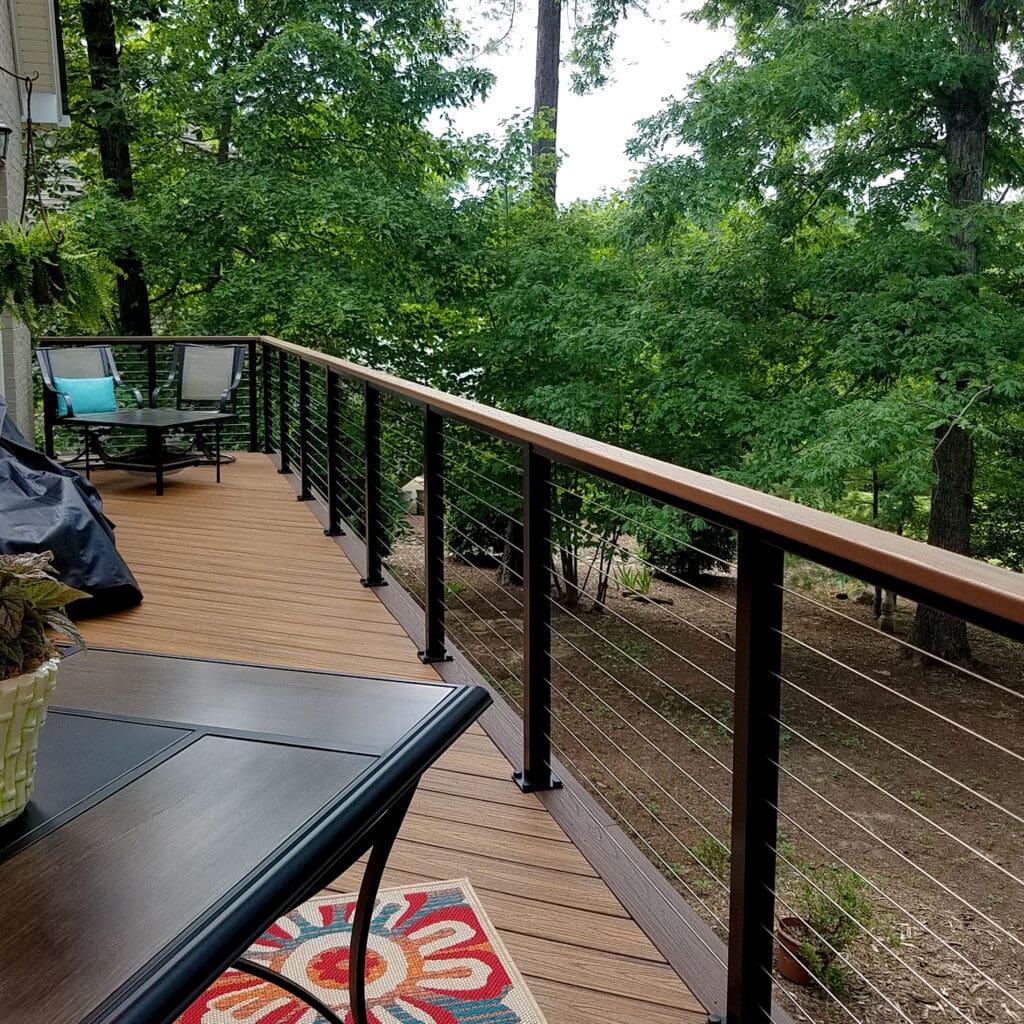
Typical Post Spacing Guidelines
Most cable railing installations adhere to standard best practices, while the precise spacing may vary according to regional regulations and system requirements:
- 36–42 inches on center for standard horizontal cable runs
- Closer spacing for taller guardrails or high-wind areas
- Tighter spacing when using thinner cables or softer post materials
For large patios and decks, it’s usually better to err on the side of more frequent posts rather than pushing maximum allowable distances.
Factors That Influence Post Spacing
1. Railing Height
Railings that are taller are subject to greater leverage and deflection. A 42-inch guardrail usually needs fewer spaces between posts than a 36-inch system in order to keep the wire tension and limit movement.
2. Cable Diameter and Quantity
Smaller diameter cables may require additional posts to control deflection. In a similar vein, the significance of post support is heightened by the fact that systems with fewer cables per section place a greater amount of tension on each cable.
3. Post Material
- Steel or stainless steel posts allow for wider spacing due to higher rigidity
- Wood posts often require closer spacing to prevent flexing over time
- Aluminum posts typically fall in between, depending on wall thickness
When making decisions about spacing, they should always be looked at along with the choice of materials.
4. Run Length and Layout
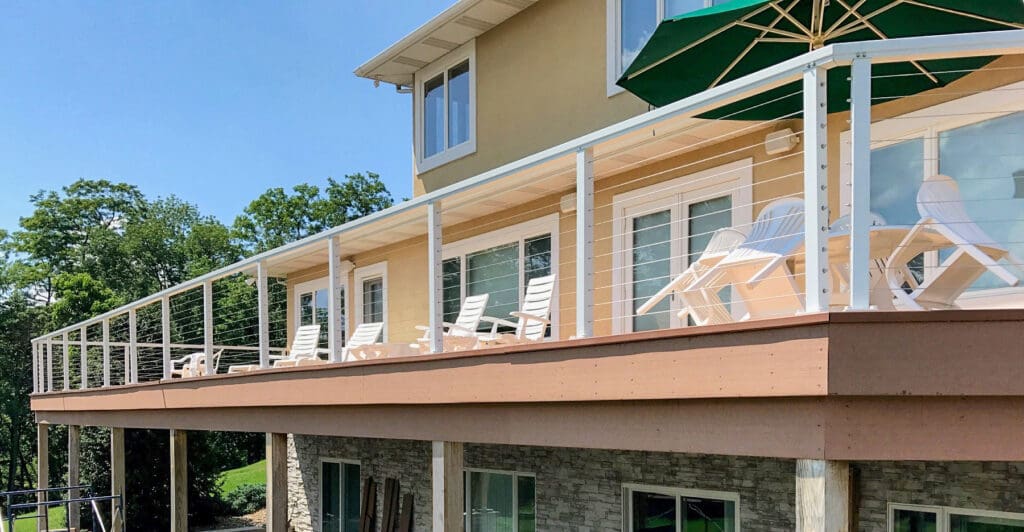
Long, unbroken railing runs are a common feature of large decks and patios. Because cable deflection is amplified over such long lengths, intermediate posts are crucial for ensuring uniform tension throughout the system.
Additionally, extra posts are usually necessary for corners, stair transitions, and changes in elevation.
5. Local Building Codes
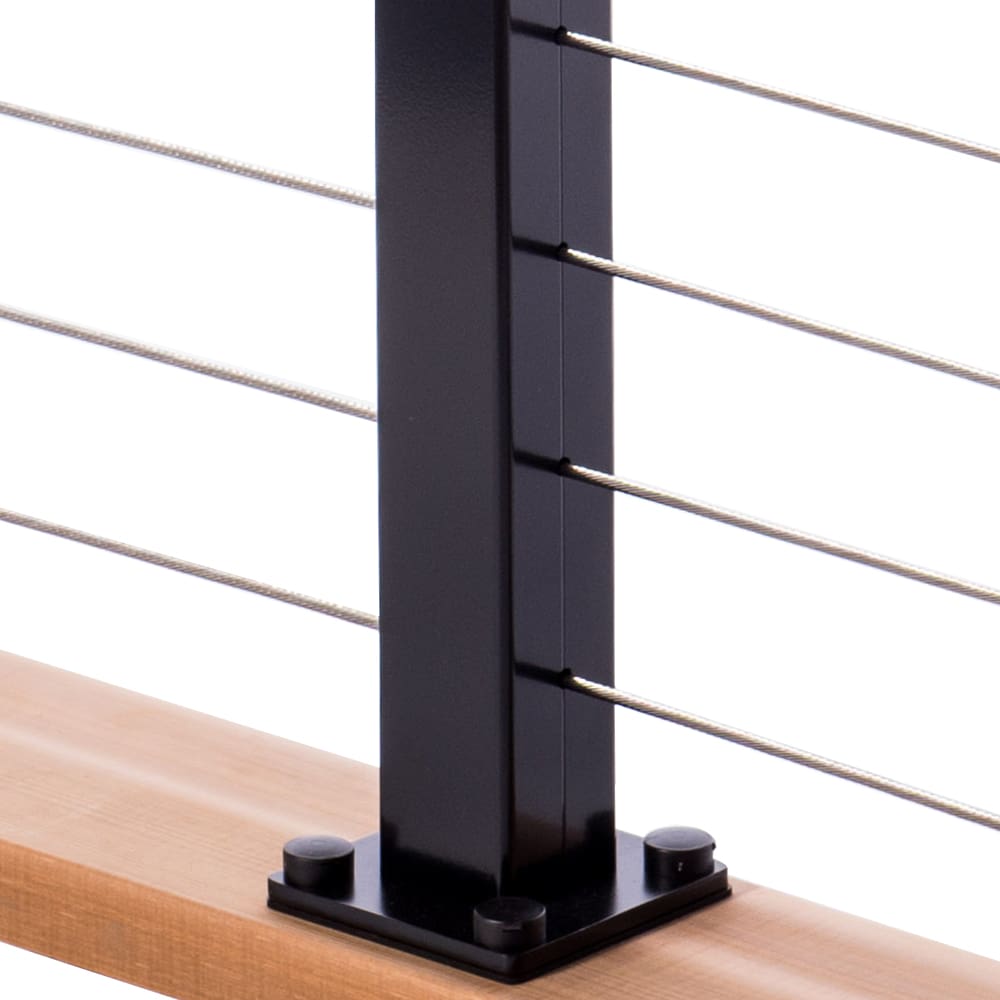
Most building codes require that a 4-inch sphere cannot pass through the railing system, but this rule is often misunderstood.
A common mistake is assuming cables should be spaced 4 inches apart. In reality, spacing cables at 4 inches will typically fail inspection, because the 4-inch sphere can still push through the cables once they deflect under load.
For this reason, we recommend spacing cables every 3 inches to reliably meet the sphere test, even when pressure is applied. Cable spacing must always be considered together with proper tensioning and post placement.
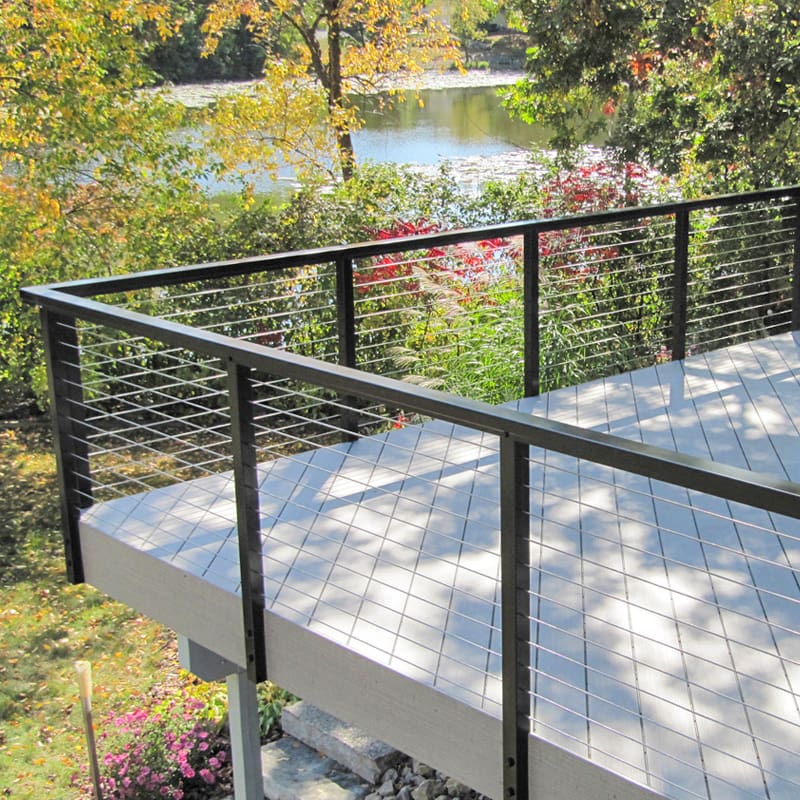
Post spacing also plays a major role. To control deflection on large patios and decks, posts should generally be spaced no more than 4 feet apart.
Always verify local code requirements before finalizing your layout.
Balancing Structure and Aesthetics
The open, contemporary appearance of wire railings is one of its primary draws. Keeping visual distractions to a minimum is frequently a major focus on large decks with broad views.
Strategic post placement allows you to:
- Align posts with deck framing
- Match spacing with architectural features
- Maintain visual rhythm without compromising safety
Even if the average distance stays the same, it is generally more aesthetically pleasant to have consistent spacing rather than alternating between wide and narrow areas.
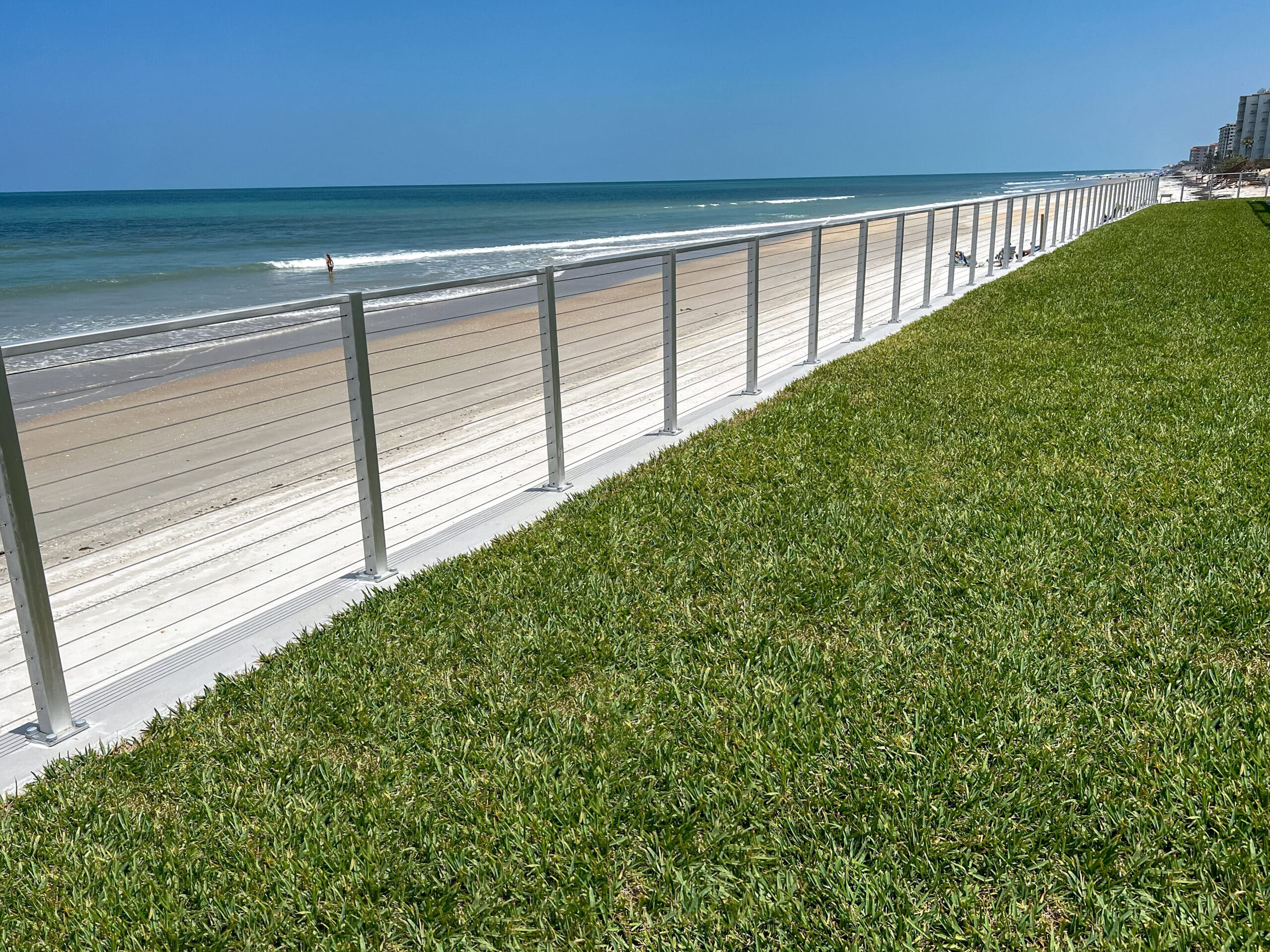
Planning Tips for Large Installations
- Map post locations early during deck design, not after framing is complete
- Coordinate with structural framing to ensure solid mounting points
- Plan for end and corner posts to handle higher cable loads
- Avoid maximum spacing limits on long runs whenever possible
Planning post spacing in advance can help to minimize installation difficulties and save later, expensive changes.
Final Thoughts
Correct post spacing is the backbone of a successful cable railing system—particularly on large patios and decks. When railing height, materials, cable layout, and code requirements are taken into account, the end result is a system that is strong, long-lasting, and has a clean, modern appearance.
Careful planning ensures your cable railing complements the space, preserving both structural integrity and visual appeal without unnecessary compromises.
Need Help Planning Your Layout?
Post spacing, cable spacing, and overall layout can quickly become complex on large patios and decks—especially when code compliance is on the line. Our staff is here to assist you with any inquiries you may have regarding materials, post spacing, cable spacing, or layout suggestions.
Get in touch with us to talk about your project, go over your designs, and receive professional advice to make sure your cable railing system is built to function and pass inspection with assurance.
Phone: (888) 686-7245
Email: [email protected]